
n761c, – Relevant Details and Applications
Definition and Context of n761c,
The term n761c, corresponds to a technical reference or specific code used in certain industrial or technological contexts. Although its meaning may vary depending on the area, its application is recognized for its precision and relevance in processes that require strict control of parameters. In the Brazilian market, the n761c, has been associated with measurement systems, calibration, and equipment that require high reliability.
Understanding the n761c, implies knowing its structural and functional characteristics, which directly influence operational efficiency and the quality of the results obtained.
Discover everything about n761c and how it impacts your project with 76k com.
Find out enough about n761c to move forward efficiently and champions.
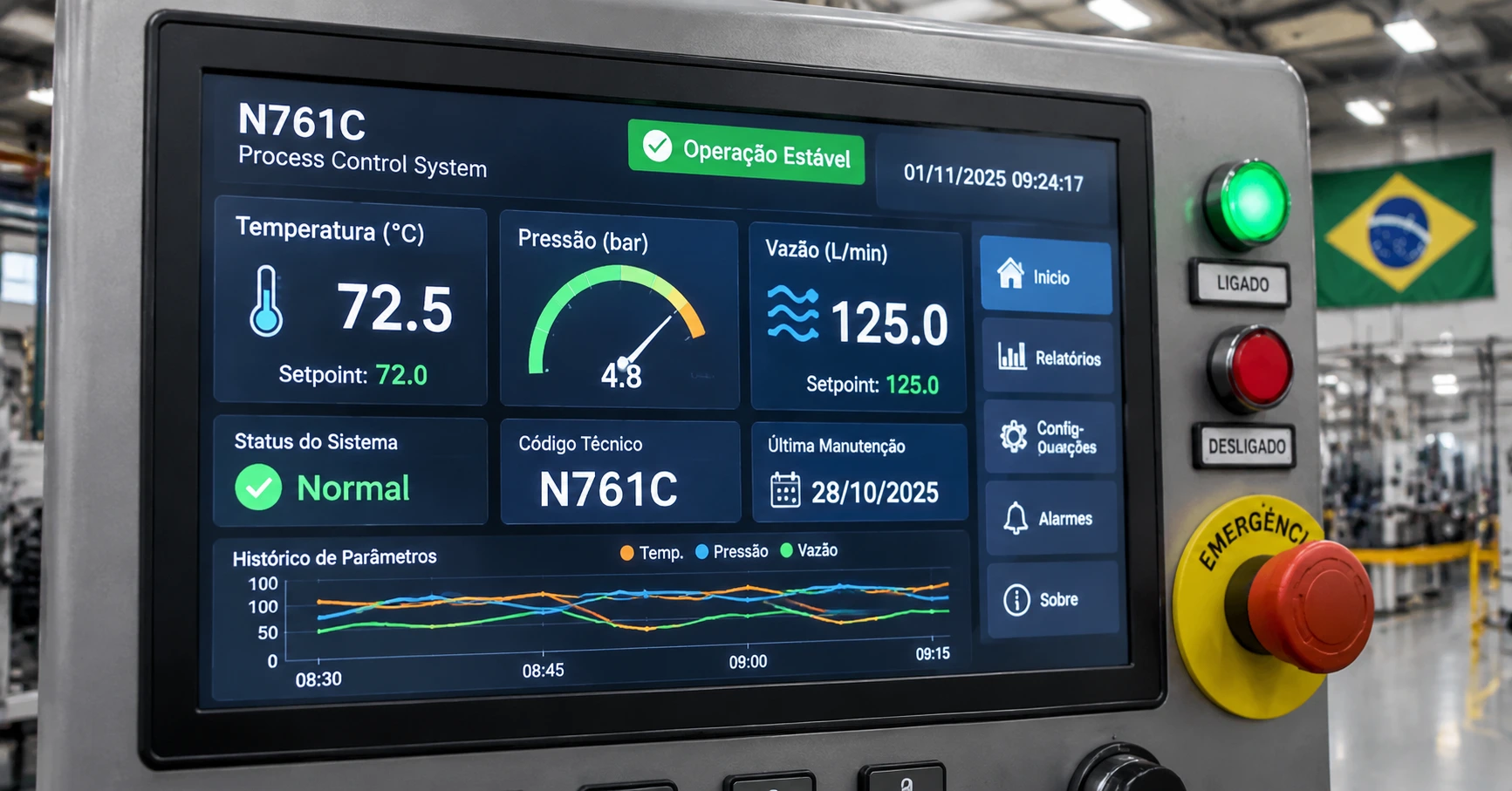
In addition, the n761c, is frequently adopted in sectors such as advanced manufacturing, industrial automation, and quality control, where data accuracy is essential to ensure compliance with technical and regulatory standards. Its robustness and adaptability make it a preferred choice for companies seeking to optimize their production processes.
In the technological context, the n761c, can also be integrated into digital monitoring systems, expanding its usefulness in real-time analysis and predictive maintenance. This versatility reinforces the importance of the n761c, as a key element in modern solutions.
Comparison between f 765 and n761c,
Another important technical reference is the f 765, which is often compared to the n761c, due to its functional proximity in certain applications. While the f 765 is usually used in scenarios with dynamic requirements and high variability, the n761c, stands out for its stability and precision in controlled environments.

This distinction is crucial for professionals seeking the best solution for their operations, especially when it comes to performance and compliance with Brazilian technical standards.
The f 765 tends to be applied in processes that demand quick response and operational flexibility, such as production lines with frequent variations. Meanwhile, the n761c, is preferred in situations where repeatability and data reliability are essential, such as in calibrations of sensitive equipment.
When analyzing the characteristics of the n761c, in comparison to the f 765, it can be seen that the choice between the two codes depends on the balance between stability and adaptability required by the project or system in question.

How much is 76 converted to real?
The conversion of the value 76 to the Brazilian currency (real) depends on the context in which the number is applied. If we interpret the value as a foreign monetary unit, the exchange rate in effect at the time of conversion will be decisive. For example, 76 US dollars converted to real vary according to the day's exchange rate.
For illustrative purposes, considering a fictitious and variable rate, the converted value can be calculated by multiplying 76 by the quotation. It is important to note that exact values depend on official and up-to-date sources.
In addition to the dollar, the value 76 can be converted from other currencies, such as euros or pounds, directly influencing the final result in real. This type of conversion is essential for companies that work with imports, exports, or international investments.
For those looking to understand how much is 76 converted to real, it is recommended to follow daily exchange rates and use reliable conversion tools, thus ensuring accuracy in financial operations.
Analysis of the range 76 to 90
The range 76 to 90 is widely used in quantitative and classificatory assessments, and may represent performance bands, measurements, or parameters in various sectors. In technical contexts, this range indicates an operating zone considered efficient or safe, depending on the specifications.
Knowing the variations within this range allows fine adjustments and informed decisions, contributing to process optimization and risk reduction.
Specifically, the range 76 to 90 can be applied in quality analyses, statistical control, and performance monitoring, where values below or above this band may indicate the need for intervention. In some cases, this range serves as a benchmark for comparison between different systems or equipment.
Additionally, a detailed understanding of the range 76 to 90 is essential for the correct interpretation of data and for strategic decision-making, especially when dealing with critical parameters in industrial or financial processes.
Related Data Table for n761c,
| Parameter | Value | Unit | Description | Note |
|---|---|---|---|---|
| n761c, Code | n761c, | Identifier | Standard technical code | Used in calibration |
| Comparison f 765 | f 765 | Code | Alternative reference | For dynamic use |